
Compost vs. Bagged Garden Soil: What Actually Goes Into Your Raised Bed
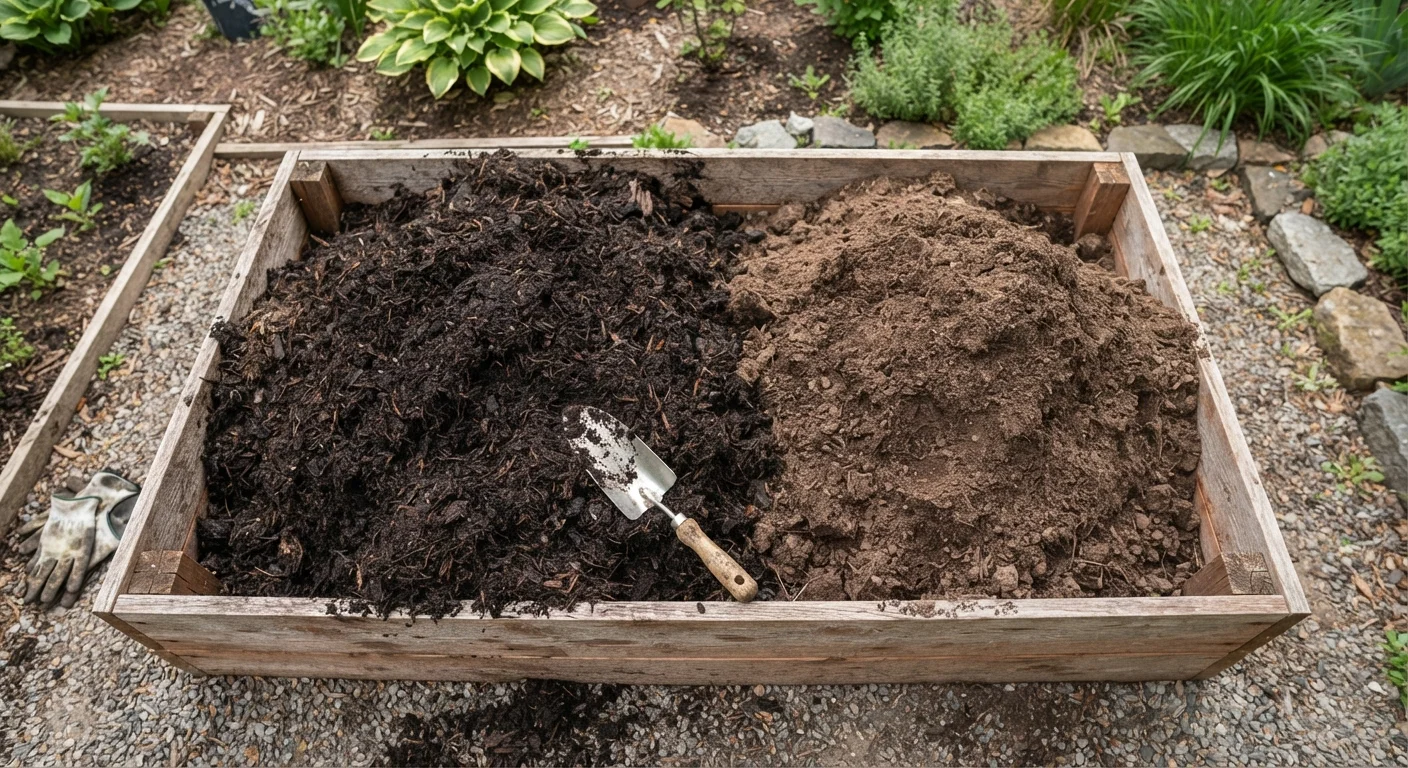
Photo credit: featuredbuzz.com
In this article
Understand the real differences between compost, topsoil, and potting mix so you can build fertile garden beds without buying more than you need.
Key Takeaways
- Compost is an amendment, not a standalone growing medium; it improves soil rather than replacing it.
- Bagged garden soil varies widely by brand and formulation, so reading the ingredient label matters.
- A productive raised bed typically combines fill soil with 25 to 30 percent compost by volume.
- Buying compost in bulk from a municipal facility can cost significantly less than bagged alternatives.
- Potting mix and topsoil are not interchangeable with garden soil, and each serves a different purpose.
What each product actually is
Compost is decomposed organic matter, typically plant scraps, yard waste, and sometimes food waste, broken down by microbes into a dark, crumbly material. It is not a growing medium on its own. Its job is to add nutrients, improve drainage in heavy soils, and retain moisture in sandy ones. A raised bed filled entirely with compost will sink dramatically as it continues to break down and can dry out unevenly.
Bagged garden soil is a broader category. Depending on the product, it may contain topsoil, composted materials, sand, bark fines, or perlite. Topsoil is simply the upper layer of native soil, and its quality varies enormously by source. Some bagged garden soils are blended specifically for raised beds and already include compost; others are closer to raw topsoil with very little amendment. Reading the ingredient list on the bag tells you more than the marketing copy on the front.
Potting mix is a separate category worth naming here because it causes real confusion. It is designed for containers and usually contains no soil at all, relying on peat or coir, perlite, and sometimes bark. It drains fast and stays light, which matters in a pot but is unnecessary and expensive in a large raised bed.
| Criterion | Compost | Bagged garden soil |
|---|---|---|
| Primary function | Amendment; improves fertility and structure | Fill material; provides growing volume |
| Can be used alone in a raised bed | No; sinks and dries unevenly | Yes, with caveats; quality varies by product |
| Nutrient content | High in organic matter and slow-release nutrients | Low to moderate; depends on formulation |
| Typical cost per cubic foot | Low if sourced in bulk or made at home | Moderate; bulk delivery cheaper than bags |
| Recommended ratio in a raised bed | 25 to 30 percent of total volume | 60 to 70 percent of total volume |
| Long-term maintenance role | Annual top-dressing to replenish organic matter | Base layer; rarely needs full replacement |
How to combine them for a productive raised bed
A common starting point for a new raised bed is roughly 60 to 70 percent quality garden soil or blended topsoil, and 25 to 30 percent compost, with the remainder being coarse material like perlite or aged bark if drainage is a concern. This ratio gives you structural volume, biological activity, and moisture retention without the rapid settling that comes from too much compost.
If you are refreshing a bed that has been in use for a few seasons, you usually do not need to replace the base soil. Adding two to four inches of compost each spring, worked into the top few inches, is enough to replenish organic matter lost during the growing season. That annual top-dressing approach is where mulching practices intersect with soil management: a layer of mulch on top of your amended bed slows moisture loss and gradually contributes organic matter as it breaks down.
For renters or anyone growing in containers rather than in-ground beds, the soil math changes. Container gardening calls for mixes that drain quickly and stay lightweight, which is where potting mix earns its cost.
Where to source each material without overspending
Bagged garden soil is available at most hardware and garden supply stores. Prices vary, but large bags cover only a few cubic feet, so costs add up fast when filling a deep bed. For beds larger than four by eight feet and at least ten inches deep, calculate the cubic footage you need before buying, and compare the per-cubic-foot cost of bags against bulk delivery options.
Compost is where families have the most room to save. Many municipalities offer free or low-cost compost made from collected yard waste; checking with your local public works department is worth the phone call. Home composting, even with a simple bin, produces usable compost within a few months in warm weather and costs almost nothing after the initial setup. Worm castings from a small vermicomposting bin are another option for households with limited outdoor space.
When buying bagged compost, look for products that list specific feedstocks such as yard trimmings, food scraps, or manure, rather than vague terms. A finished, stable compost should smell earthy, not sour or ammonia-like. An unpleasant odor suggests incomplete decomposition, which can temporarily tie up nitrogen in your soil.

Author
Affordable Home & Garden Editorial Team
Affordable Home & Garden Editorial Team is the collective byline for our editorial team and contributor network. Articles published under this byline or an editorial pen name are researched, written, and reviewed according to our editorial standards for clarity, consistency, and independence before publication.
View all articles →