
Container Gardening for Renters: Growing Vegetables on Patios and Balconies
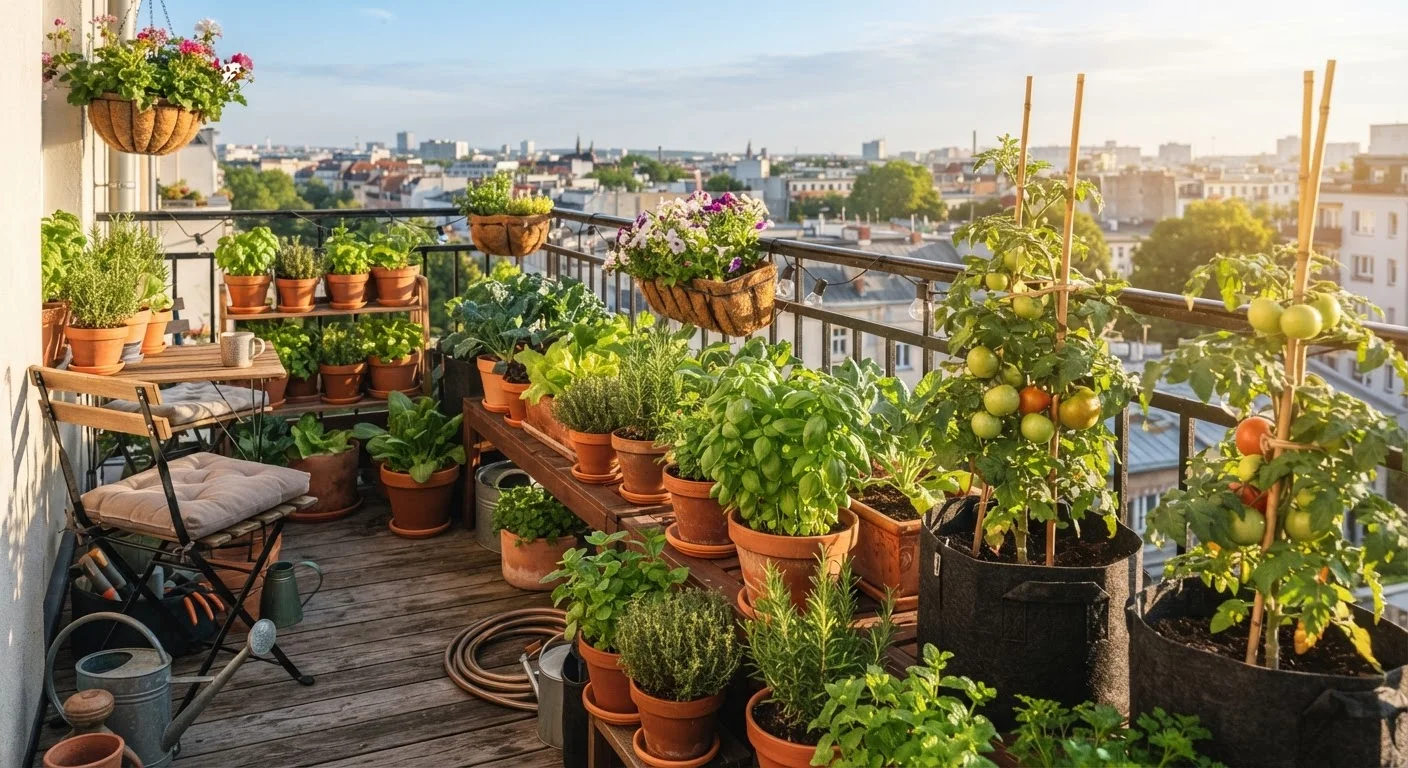
Photo credit: featuredbuzz.com
In this article
A practical starting point for renters who want to grow food without a yard, covering container size, soil mix, drainage, and sun requirements.
Key Takeaways
- Most vegetables need at least 6 hours of direct sun, so assess your balcony's exposure before buying anything.
- Container size is the single biggest factor in whether a vegetable plant thrives or stalls.
- Potting mix, not garden soil or topsoil, is the right growing medium for containers.
- Drainage holes are required on every container; sitting water kills roots faster than drought.
- Renters should check their lease for weight limits or restrictions before setting up large pots.
What renters need to know before starting
Growing vegetables without a yard is entirely practical, but a few real-world constraints apply to renters that homeowners don't face. Check your lease before you buy a single pot. Some leases restrict items on balconies by weight, appearance, or type. Heavy containers on an older wood deck can be a structural concern, and some landlords prohibit anything that penetrates or stains the surface.
Once you've confirmed you're clear to proceed, assess your outdoor space honestly. Measure the usable floor area, note which direction the balcony faces, and observe when sun hits it. South- and west-facing balconies typically get the most light in the Northern Hemisphere. North-facing ones may support only shade-tolerant greens. Document what you find before spending money on plants that won't suit the space.
Talk to your landlord early
A brief conversation before you set up can prevent problems later. Ask specifically about weight limits on decks or balconies and whether any surface protection (rubber mats, pot saucers) is required. Most landlords have no objection to a tidy container setup, and getting verbal or written confirmation costs nothing.
Choosing containers: size and material
Container size determines how much root space a plant gets, which directly affects how much food it produces. A tomato plant in a 3-gallon pot will struggle; the same plant in a 15-gallon container has room to develop and fruit. General minimums by crop type:
- Lettuce and herbs: 6 to 8 inches deep, at least 1 gallon per plant
- Bush beans and radishes: 8 inches deep, at least 2 gallons
- Peppers and compact tomatoes: 5 gallons minimum, 10 to 15 gallons preferred
- Sprawling or indeterminate tomatoes: 15 to 20 gallons
Material affects weight, moisture retention, and cost. Fabric grow bags are light, promote good root structure, and fold flat for storage, which matters when you move. Plastic pots are inexpensive and hold moisture longer, useful in hot or windy exposures. Terracotta looks good but is heavy and dries out quickly. Whatever you choose, every container must have drainage holes. If a pot doesn't have them, drill at least four holes in the base before filling it.
Potting mix
A growing medium formulated for use in containers. It is lighter and more porous than garden soil, draining freely while still holding moisture around plant roots.
Drainage holes
Openings in the base of a container that allow excess water to escape. Without them, water collects at the root zone and causes rot.
Determinate tomato
A tomato variety that grows to a fixed size and sets fruit within a defined window. These compact varieties suit containers better than indeterminate types, which keep growing and need more space.
Microclimate
Local conditions that differ from the surrounding area. Balconies often create their own microclimates: more wind, more reflected heat, or uneven sun coverage compared to ground-level gardens.
Slow-release fertilizer
A fertilizer formulated to break down gradually over weeks or months. It feeds plants steadily rather than delivering a large dose all at once.
Soil mix and drainage
The medium you put in a container matters as much as the container itself. Standard garden soil and topsoil compact under repeated watering, squeezing out the air pockets that roots need. Use a potting mix designed for containers; it stays loose and drains while still holding enough moisture between waterings. For more on what separates potting mix from other soil products, see our article on compost versus bagged garden soil.
Drainage layering matters too. Some gardeners place a thin layer of gravel or broken pot shards at the bottom of containers to keep soil from washing out of holes. This can help, but the most important factor is that water can actually exit freely. Elevate pots slightly using pot feet or small pieces of wood so the drainage holes don't rest flat against the surface.
A basic potting mix can be stretched further by mixing in a portion of compost (roughly 20 to 30 percent by volume), which adds nutrients and improves moisture retention without making the mix too dense. Refresh or replace container soil each season, because nutrients deplete and structure breaks down over time.
Sun requirements and what to grow
Sun hours determine what you can realistically grow. Count carefully over a full day rather than estimating from memory.
- 6 or more hours of direct sun: tomatoes, peppers, cucumbers, beans, eggplant
- 4 to 6 hours: herbs (basil, parsley, cilantro), kale, Swiss chard
- 3 to 4 hours: lettuce, spinach, arugula, green onions, radishes
Leafy greens are the most forgiving starting point for low-light or first-time balcony gardeners. They grow fast, can be harvested repeatedly by taking outer leaves, and tolerate the uneven conditions that come with balcony microclimates (wind, heat reflected off walls and railings).
Compact and dwarf varieties of fruiting vegetables are bred specifically for containers. A full-sized indeterminate tomato in a 5-gallon pot on a windy 6th-floor balcony will underperform. A determinate or patio-type tomato variety in a 15-gallon fabric bag, given adequate sun and regular watering, can produce a steady harvest through summer.
Watering, feeding, and keeping costs low
Containers dry out faster than garden beds because they have limited soil volume and often sit in full sun or wind. In warm weather, small pots may need water twice a day. A consistent routine matters: uneven watering causes problems like blossom end rot in tomatoes and tip burn in lettuce. The finger test (push a finger an inch into the soil; water if dry) is a reliable guide regardless of temperature or season.
Container plants need regular feeding because nutrients wash out with each watering. A balanced, slow-release granular fertilizer mixed into the soil at planting, plus a liquid feed every two to three weeks during the growing season, covers most crops adequately. Avoid over-fertilizing with nitrogen, which produces lots of leaves but few fruits on tomatoes and peppers.
Keeping costs manageable over time comes down to a few habits. Growing from seed rather than buying transplants cuts per-plant cost significantly. Reusing containers and refreshing soil with homemade or purchased compost is less expensive than replacing potting mix entirely each year. Fabric bags fold flat for storage, so they don't require off-season space. If you're weighing whether to invest more time in patio growing versus other garden types, drought-tolerant front yard planting may interest renters who have any ground-level access alongside their balcony space.
Frequently Asked Questions

Author
Affordable Home & Garden Editorial Team
Affordable Home & Garden Editorial Team is the collective byline for our editorial team and contributor network. Articles published under this byline or an editorial pen name are researched, written, and reviewed according to our editorial standards for clarity, consistency, and independence before publication.
View all articles →