
Camping vs. Budget Hotels: Which Saves More for Family Travel?
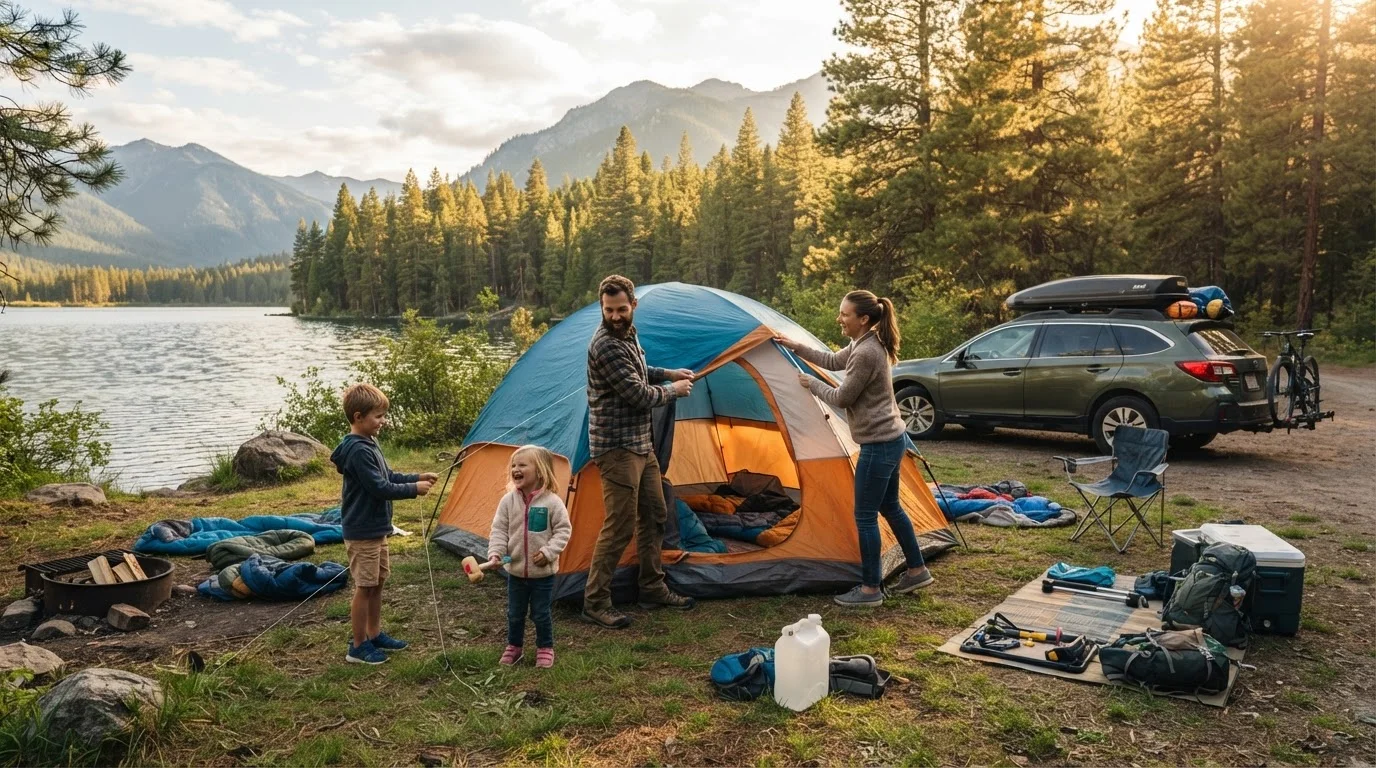
Photo credit: featuredbuzz.com
In this article
A practical look at the true costs and trade-offs of camping versus staying in budget hotels when traveling with kids across the US.
Key Takeaways
- Camping nightly rates are often lower, but gear costs and reservation fees can close the gap quickly.
- Budget hotels eliminate setup time and typically include Wi-Fi, climate control, and private bathrooms.
- Camping enables significant food savings when families cook their own meals at the site.
- Hotel locations near attractions can reduce transportation costs and time on the road.
- The right choice depends on trip length, family size, existing gear, and how your family travels.
What each option actually costs per night
Published campsite rates at US state parks typically run between $20 and $45 per night for a standard tent or RV site, though reservation fees and park entry costs add to that total. Many popular sites now charge a separate booking fee of $8 to $10 per reservation. Budget hotel chains in mid-size US cities generally list rates from $70 to $120 per night for a family room, though prices rise near major attractions and during summer peak weeks.
On paper, camping wins on nightly rate almost every time. A five-night camping trip might cost $150 to $225 in site fees versus $350 to $600 at a budget hotel. That gap is real, but it is not the whole picture. Gear is the variable that changes everything. A family equipping itself from scratch with a tent, sleeping bags rated for the season, sleeping pads, a camp stove, and cookware can spend $400 to $800 or more before leaving the driveway. Over one trip, those purchases wipe out the savings. Spread across multiple trips over several years, the math shifts back toward camping.
For a fuller look at overlooked line items that inflate vacation budgets, see what families often forget when budgeting.
| Criterion | Camping | Budget hotels |
|---|---|---|
| Average nightly cost | $20 to $45 per site | $70 to $120 per room |
| Upfront gear investment | $400 to $800+ if starting from scratch | None |
| Meal preparation | Full cooking setup available | Mini-fridge or microwave at best |
| Climate control | None; weather-dependent | Air conditioning and heat standard |
| Setup time per night | 30 to 60 minutes | 5 minutes or less |
| Bathroom access | Shared or pit toilets at most sites | Private bathroom in room |
| Best trip length | 5 or more nights | Any length |
| Wi-Fi access | Rarely available | Standard at most properties |
Food costs: where camping pulls ahead
Food is where camping can produce its most consistent savings. A camp stove and cooler allow families to prepare meals at the site instead of eating out three times a day. A family of four eating at sit-down or fast-casual restaurants can spend $60 to $100 daily on food. Cooking at camp, using groceries bought before arrival, can bring that figure down to $20 to $35 per day.
Over a week, that difference can reach $300 or more. Budget hotels do not offer this same advantage by default, though rooms with a mini-fridge and microwave allow limited food prep, such as morning oatmeal or simple lunches that reduce the number of full restaurant meals. Bringing prepared food from home is a strategy that works for both options but is easier to execute with camping's dedicated cooking setup.
$20-$45
Typical campsite fee per night at US state parks
State park fee schedules vary by state and site type; reservation and entry fees often add to this base cost.
$300+
Potential food savings over a week of camp cooking vs. dining out
Based on the difference between family restaurant spending of roughly $60 to $100 per day versus camp-cooked meals at $20 to $35 per day.
$400-$800
Estimated starter gear cost for a family new to camping
Costs vary by brand and quality; families can reduce this by renting gear for early trips before committing to a purchase.
Convenience, safety, and the reality of camping with kids
Budget hotels offer a predictable experience: air conditioning in July, a locked door, hot showers, and no weather concerns. For families with children under five, or with any member who has medical needs requiring consistent temperature or hygiene access, that predictability has real value that does not show up in a cost comparison.
Camping with young children requires more planning. Families need to account for nighttime temperatures, insects, bathroom proximity, and how well their children actually sleep outside their normal environment. A rough night at the campsite is not just uncomfortable; it affects how much everyone enjoys the following day's activities.
Safety considerations are also different. Campsite security varies, and families camping in bear country need to follow food storage rules strictly. Budget hotels, by contrast, have standard locks, front-desk staff, and predictable surroundings. Neither option is inherently unsafe, but the preparation required differs substantially.
Families planning outdoor-centered itineraries may find that state parks offer excellent value as destinations where camping and the primary activity are the same place, cutting transportation costs.
Trip length and location shape the final number
Short trips of two to three nights favor budget hotels for most families. Setup and breakdown time for camping takes a meaningful share of a short trip, and the per-night savings are not large enough to justify the effort unless the family is already experienced and geared up.
Longer road trips of seven or more nights, especially those following a route through national forests or state parks, tend to favor camping economically and experientially. The road trip planning considerations for tight family budgets differ depending on whether camping or hotels anchor the lodging strategy. Campgrounds along a route also tend to be in scenic areas that are themselves the attraction, so families are not paying separately for activities.
Location matters for hotels too. A budget hotel placed ten minutes from the main attraction costs less in gas and time than a slightly cheaper property twenty miles out. That transportation delta is easy to miss when comparing nightly rates directly. Families weighing vacation rental options as a third path can review how vacation rentals compare for larger families.

Author
Budget Travel Tips Editorial Team
Budget Travel Tips Editorial Team is the collective byline for our editorial team and contributor network. Articles published under this byline or an editorial pen name are researched, written, and reviewed according to our editorial standards for clarity, consistency, and independence before publication.
View all articles →