
Road Tripping Across America on a Tight Family Budget
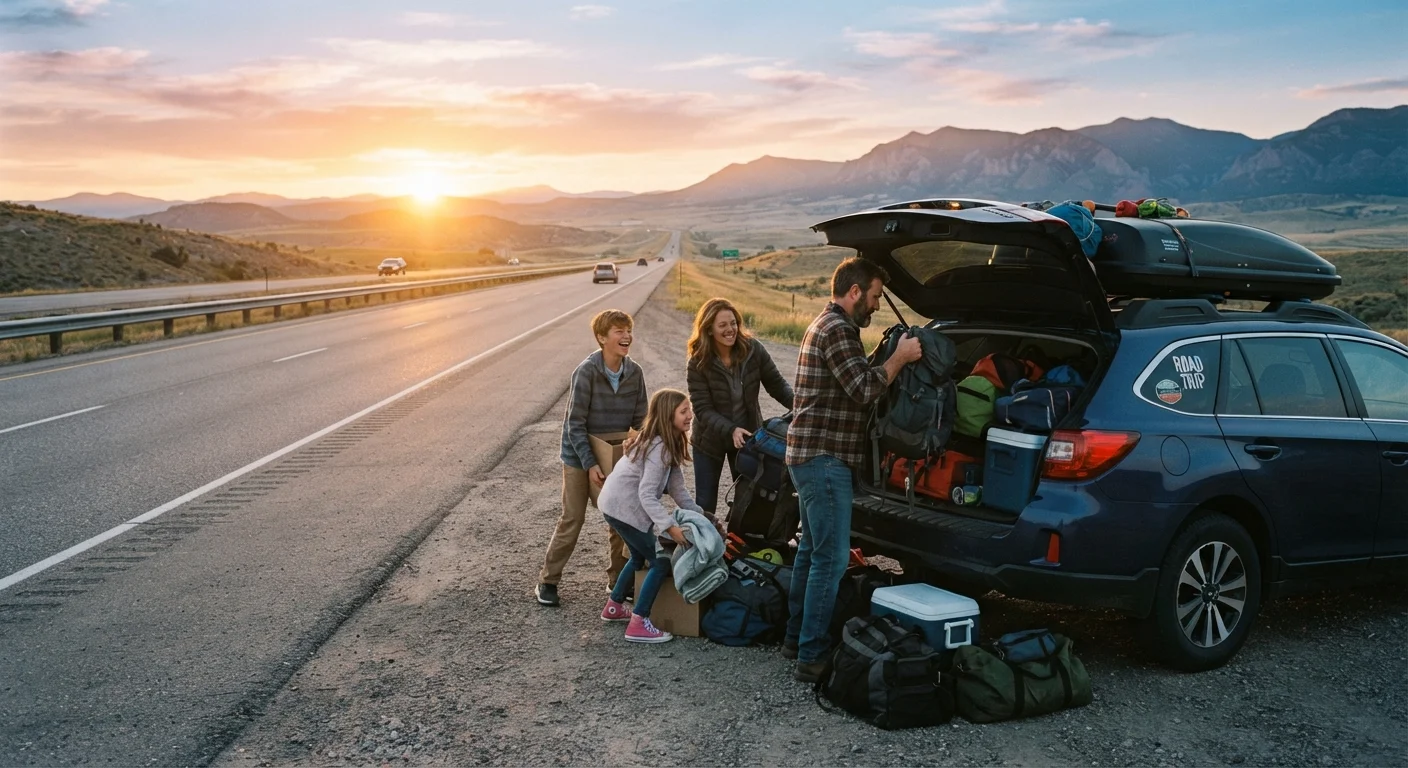
Photo credit: featuredbuzz.com
In this article
- Why road trips work for budget families
- Planning your route around cost, not just scenery
- Keeping fuel costs under control
- Lodging: free campgrounds vs. budget overnight options
- Food on the road without the restaurant bill
- Low-cost and free activities at every stop
- Building your road trip budget before you leave
Learn how to plan an affordable US road trip for families, from fuel-saving routes to free campgrounds and low-cost pit stops.
Key Takeaways
- Choosing a fuel-efficient route can reduce your gas budget by 20 percent or more compared to scenic detours.
- Free dispersed camping on Bureau of Land Management land is legal in most western states and costs nothing.
- Packing a cooler with prepared meals cuts food spending to a fraction of eating out daily.
- National parks with annual passes pay for themselves quickly for families visiting more than two parks.
- A written per-day budget with a small buffer prevents overspending on impulse stops.
- State parks often charge far less than private campgrounds and offer comparable facilities.
Why road trips work for budget families
Flying a family of four anywhere in the US costs hundreds of dollars in airfare alone, before a single hotel room or meal appears on the bill. A road trip shifts that math significantly. You pay for gas, which scales with distance rather than headcount, and you keep total control over where you sleep and what you eat.
The flexibility is itself a budget tool. If a campground is full, you move on. If a town looks expensive, you drive through. That ability to adapt in real time is something no airline ticket gives you. Families who road trip regularly tend to spend less per trip not because they sacrifice experiences, but because they stop paying for convenience they can easily provide themselves.
For context on how common beliefs about trip costs lead families astray, see family travel budget myths worth examining before you plan.
Planning your route around cost, not just scenery
Interstate highways burn less fuel than winding state routes because your speed stays steadier and stop-and-go driving drops. For long legs between destinations, the interstate is the cheaper path even if it looks less interesting on the map. Reserve the scenic detours for shorter stretches where the extra mileage is minimal.
Cluster your stops geographically. A route that zigzags to hit every family wish-list item adds hundreds of miles. Instead, pick a corridor, say the Southwest loop through Utah and Colorado, or the Appalachian corridor through Virginia and Tennessee, and go deep on what that region offers. You spend less on gas and less time in the car, which matters enormously with kids.
Free routing apps that show gas prices along the route let you plan fill-ups at cheaper stations rather than stopping wherever the tank runs low. A few cents per gallon adds up over a week-long trip.
Build your route around a single geographic corridor and go deeper into it rather than trying to hit destinations across multiple regions. You will spend less time driving and less money on fuel while seeing more of what each area actually offers.
Zigzag routes add hundreds of unnecessary miles. Families who stay within a corridor consistently report lower fuel costs and less travel fatigue.
Before leaving home, call ahead to any BLM or national forest area where you plan to camp without a reservation to confirm current access and fire restrictions. Rules change seasonally and conditions vary.
Free dispersed camping is one of the most effective cost tools for western road trips, but arriving at a closed or restricted area without a backup plan creates real problems.
Keeping fuel costs under control
Fuel is typically the single largest line item on a family road trip. The variables you can actually control are vehicle choice, speed, and fill-up strategy.
If you own more than one vehicle, run the numbers before assuming the bigger one is necessary. A minivan carrying camping gear might get 22 mpg; an SUV with a roof box might drop to 18. Over 2,000 miles, that gap is roughly 20 gallons, which translates to real money depending on current prices in your region.
Driving at or just below the posted speed limit reduces fuel consumption noticeably. Above roughly 60 mph, aerodynamic drag increases faster than most drivers expect. On open western highways where limits hit 75 or 80 mph, sticking to 65 mph can improve mileage by 10 to 15 percent.
Fill up in smaller towns and rural areas rather than at highway interchange stations, which typically charge a premium. Gas-price tracking apps let you see what is ahead on your route so you can plan accordingly.
Lodging: free campgrounds vs. budget overnight options
Accommodation spending on a road trip is where families most often underestimate costs, especially if they default to private campgrounds or budget hotel chains every night. There are genuinely free options that work well with kids.
Bureau of Land Management (BLM) land in western states allows dispersed camping at no charge in most areas, typically for up to 14 consecutive days. No reservation, no hookups, but also no fee. National forests operate under similar rules. Both require basic Leave No Trace practice, which is worth teaching kids anyway. Confirm current rules for any specific area with the relevant land management office before you arrive, as restrictions can apply seasonally or locally.
State park campgrounds are almost always cheaper than comparable private sites, and many have reservable sites for under $30 per night. Booking a few weeks ahead for Friday and Saturday nights is often enough to secure a spot outside of peak summer weekends.
For a detailed cost comparison across overnight options, camping vs. budget hotels for family travel covers the true numbers including hidden fees.
Food on the road without the restaurant bill
Three restaurant meals a day for a family of four can cost $150 or more, every single day. Over a ten-day trip, that is $1,500 spent on food alone. A well-stocked cooler changes that completely.
Prep meals before you leave: pre-made sandwiches, hard-boiled eggs, cut fruit, pasta salads, and wraps travel well for the first two to three days. Replenish at grocery stores along the route rather than at roadside convenience stores, where prices are consistently higher. A grocery run every two to three days keeps costs down without requiring much planning.
A single-burner camp stove lets you cook hot meals at campgrounds: oatmeal, soup, rice, and pasta are easy and inexpensive. Kids often enjoy camp cooking as part of the trip experience, which is a bonus. Save restaurant meals for one or two deliberate stops at places that are genuinely worth it locally, rather than eating out by default.
For more detail on how to pack and plan meals for the road, packing family vacation meals has a practical framework.
Low-cost and free activities at every stop
National parks are the obvious answer, and the America the Beautiful annual pass covers entry to all federal lands for one flat fee per vehicle. For a family hitting more than two or three national parks in a year, the pass pays for itself. The parks themselves contain hundreds of miles of free trails, ranger-led programs, and junior ranger activities that children can complete at no extra cost.
Free and low-cost national park activities goes deeper on specific programs that cost nothing once you are inside the gate.
Beyond parks, small-town main streets, state historic sites, river access points, and public beaches are free. Many county fairgrounds, local festivals, and outdoor concerts happen throughout summer with no admission charge. Checking a destination town's official website or local events calendar before arriving often surfaces activities that do not appear in major travel guides. Community events calendars explains how to find these efficiently.
Building your road trip budget before you leave
A written budget per travel day prevents the slow bleed of unplanned spending. Estimate your daily fuel cost based on your route mileage and your vehicle's real-world mpg. Add a per-night lodging figure based on your planned mix of free camping, state parks, and any paid nights. Set a daily food budget that reflects your cooler strategy. Then add a small daily buffer, typically 10 to 15 percent of the total, for tolls, parking, laundry, and the occasional impulse ice cream stop.
Track spending each evening so you know whether you are on pace. If one day runs over, you can adjust the next. This is more useful than a single trip total because it gives you actionable information while you are still on the road.
Building a realistic family vacation budget from scratch has a full category-by-category walkthrough if you want a structured starting point. For broader daily money habits that support this kind of travel, frugal family living strategies covers the mindset behind consistent saving.

Author
Budget Travel Tips Editorial Team
Budget Travel Tips Editorial Team is the collective byline for our editorial team and contributor network. Articles published under this byline or an editorial pen name are researched, written, and reviewed according to our editorial standards for clarity, consistency, and independence before publication.
View all articles →