
Indoor Paint Finishes Decoded: Flat, Eggshell, Satin, and Semi-Gloss
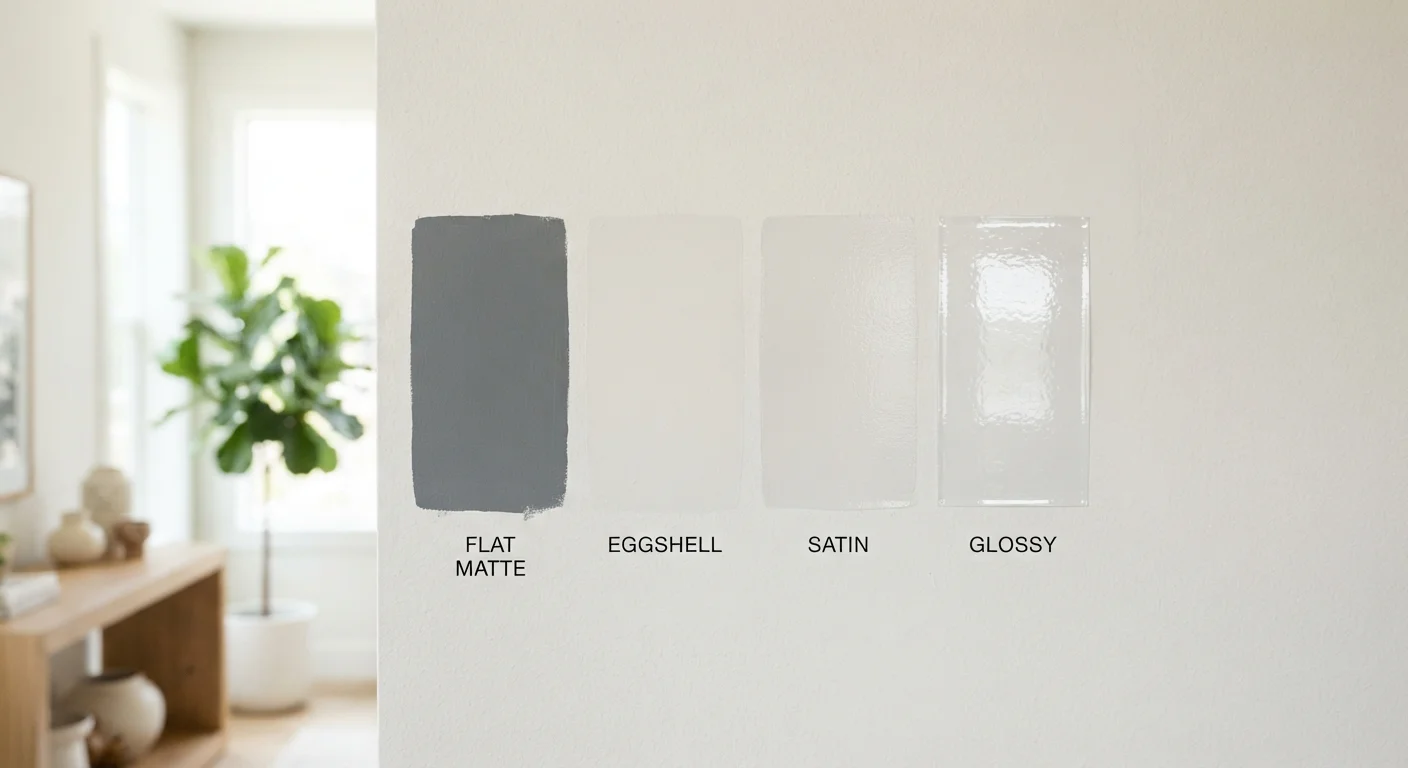
Photo credit: featuredbuzz.com
In this article
A straightforward reference explaining what each interior paint sheen means, where each performs best, and how finish choice affects cleaning and durability.
What paint sheen actually means
Paint sheen refers to how much light a dried paint surface reflects. The more resin a paint contains relative to its pigment load, the shinier the finish. Sheen level affects three things that matter to homeowners: how the wall looks under different lighting, how well it resists moisture and stains, and how easy it is to clean without leaving scuff marks.
Paint manufacturers label sheens differently, but most products fall into four practical categories: flat, eggshell, satin, and semi-gloss. Gloss is a fifth option rarely used on interior walls. Understanding where each finish works best saves you from repainting a room because the surface holds fingerprints or looks blotchy under overhead lighting.
Sheen
The degree to which a dried paint surface reflects light. Higher sheen means more light bounces off the surface, producing a shinier, more reflective appearance.
Flat (matte) finish
A paint finish with no reflective quality. It scatters light, hides surface imperfections, and is the least durable finish when exposed to scrubbing.
Eggshell finish
A low-luster finish with a slight sheen. It is more washable than flat but still hides minor surface flaws, making it a versatile choice for living spaces.
Satin finish
A smooth, soft-glow finish with moderate sheen. It resists moisture and repeated cleaning, which suits high-traffic rooms and humid spaces.
Semi-gloss finish
A clearly reflective finish with strong durability and moisture resistance. It is standard for kitchens, bathrooms, and all interior trim work.
Resin content
The binding component in paint that creates the film on a surface. Higher resin content produces a harder, shinier dried coat that is easier to clean.
Flat finish
Flat paint (sometimes labeled matte) has no noticeable sheen. It scatters light rather than reflecting it, which smooths out imperfections such as patches, old texture, and uneven drywall joints. That property makes it a good choice for ceilings, older plaster walls, and any surface you want to read as uniform.
The trade-off is durability. Flat paint is harder to wipe down without pulling up the finish. A damp cloth can remove a scuff but will also create a dull spot. Most manufacturers now sell washable flat formulas that perform better in high-traffic areas, though they still fall behind eggshell or satin in actual abrasion resistance.
Flat paint works well in bedrooms, formal dining rooms, and adult living spaces where walls are rarely touched. It is not practical for hallways, children's rooms, or kitchens.
Eggshell and satin finishes
Eggshell sits just above flat on the sheen scale. The name describes the finish accurately: a very slight, low luster similar to the shell of an egg. It reflects only a little light, so surface imperfections still fade back, and it cleans more easily than flat without looking shiny. Most painting guides treat eggshell as the standard choice for living rooms and bedrooms where some cleaning is needed.
Satin has a noticeably smoother appearance and a soft glow under direct light. It holds up to repeated wiping and handles humidity better than eggshell. These properties make it well-suited to hallways, family rooms, children's bedrooms, and any space that sees daily use. Because satin reflects more light than eggshell, surface preparation matters more: drywall repairs and patched areas are more visible under a satin coat, so thorough priming is worth the extra step. Before applying any finish over existing paint, see our guide to painting over old paint to avoid adhesion problems.
| Flat sheen level | 0 to 5% reflectance |
| Eggshell sheen level | 10 to 25% reflectance |
| Satin sheen level | 26 to 40% reflectance |
| Semi-gloss sheen level | 41 to 70% reflectance |
| Best finish for ceilings | Flat or matte |
| Best finish for bathrooms | Satin walls, semi-gloss trim |
| Most durable interior finish | Semi-gloss |
| Best at hiding wall flaws | Flat |
Semi-gloss finish
Semi-gloss has a clear, reflective surface that stands up to moisture, grease, and repeated scrubbing. It is the standard finish for kitchens, bathrooms, laundry rooms, and utility spaces. Trim work, baseboards, window casings, and doors are almost always painted semi-gloss because those surfaces take more contact and need to be wiped down often.
The higher sheen comes at a cost: any wall surface that is not smooth will show through. Bumps, patches, and roller texture are all more visible under semi-gloss than under flatter finishes. Applying semi-gloss to walls that have not been sanded and primed carefully tends to produce a result that looks worse than a flat finish would on the same surface. Reserve it for surfaces in good condition or for trim rather than large wall areas.
Choosing the right finish by room
A simple room-by-room framework reduces guesswork.
- Ceilings: flat or matte in almost every case
- Bedrooms and low-traffic living areas: flat or eggshell
- Hallways, family rooms, children's rooms: eggshell or satin
- Kitchens and bathrooms: satin on walls, semi-gloss on trim and cabinets
- All interior trim and doors: semi-gloss
One practical note: using the same sheen on walls throughout a home creates a consistent look, but mixing eggshell in bedrooms with satin in hallways is fine because the rooms are viewed separately. What looks mismatched is using two different sheens on the same continuous wall surface.
Sheen choice also interacts with color. Dark colors look more intense under higher-sheen finishes. A deep charcoal wall in semi-gloss can feel heavier than intended; the same color in eggshell reads more muted. Test a sample on the actual wall before committing to a full room in a sheen you have not used before.

Author
Affordable Home & Garden Editorial Team
Affordable Home & Garden Editorial Team is the collective byline for our editorial team and contributor network. Articles published under this byline or an editorial pen name are researched, written, and reviewed according to our editorial standards for clarity, consistency, and independence before publication.
View all articles →