
The Real Costs of Skipping Gutter Cleaning
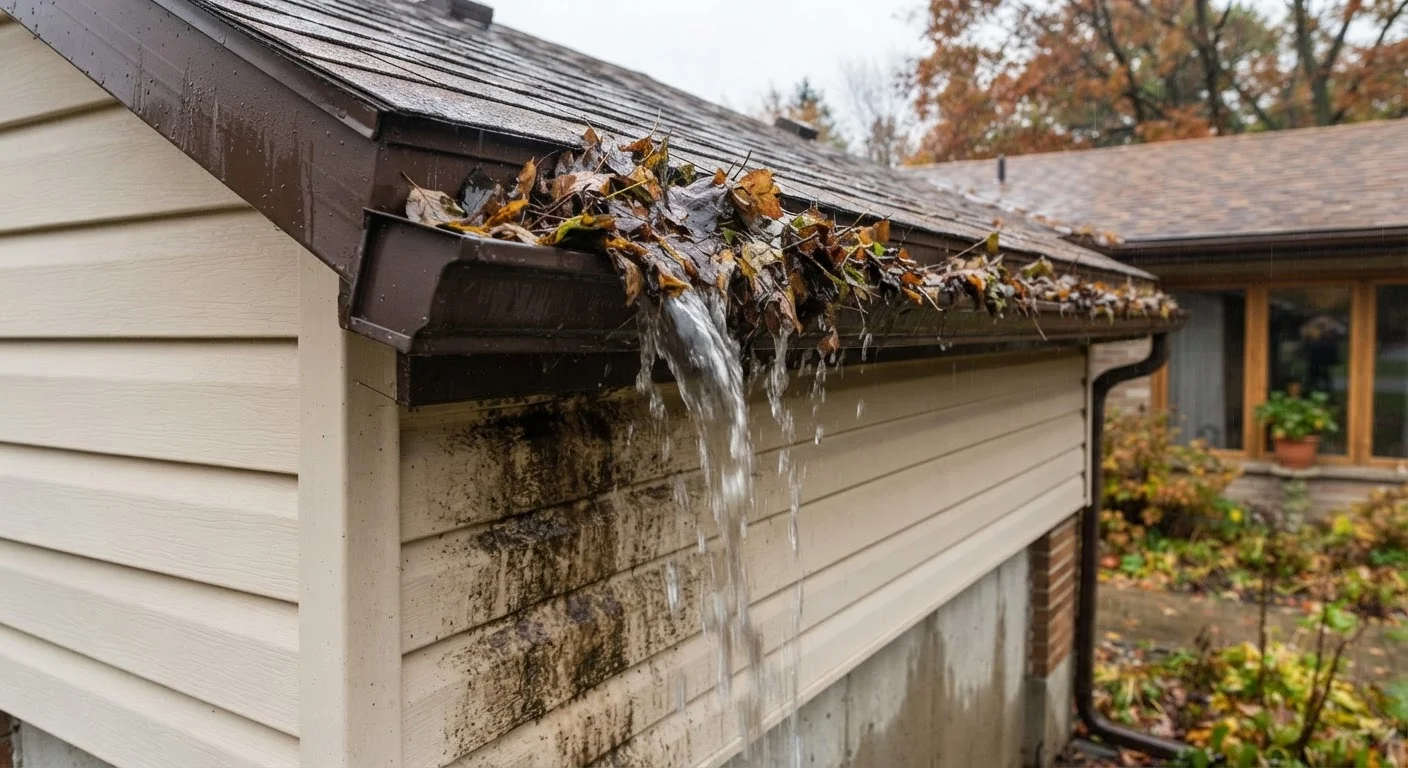
Photo credit: featuredbuzz.com
In this article
Understand how clogged gutters lead to fascia rot, foundation seepage, and ice dams, and what routine cleaning actually prevents over time.
Key Takeaways
- Clogged gutters are a leading cause of fascia rot, which can spread to rafters and sheathing if left unaddressed.
- Water pooling against the foundation from overflow is a direct path to basement seepage and cracked footings.
- In cold climates, debris-filled gutters trap standing water that freezes into ice dams, forcing water under shingles.
- Routine cleaning costs a fraction of what any one of these repairs typically runs.
- Most homeowners can clean single-story gutters safely with basic tools and proper ladder technique.
Why gutters fail quietly
Gutters are easy to ignore because the damage they cause builds slowly and stays hidden. A slightly clogged gutter does not look alarming from the ground. Water finds its way over the edge, runs down the exterior wall, and soaks into the soil. By the time most homeowners notice a problem, wood has rotted, paint has peeled, or water has already entered the basement.
The pattern is predictable: debris accumulates, water backs up, and the gutter stops doing its one job of moving rainwater away from the structure. That backed-up water has to go somewhere. It usually goes into the wood, the wall, or the foundation, which are exactly the places repairs are most expensive.
Skipping gutter cleaning is not a neutral choice. It shifts the cost from a routine task into a series of repairs that compound over time. This is consistent with spending habits that quietly drain a family budget: small deferred maintenance decisions rarely feel consequential in the moment.
Fascia rot and what comes next
The fascia board runs along the roofline and holds the front edge of the gutter. When a clogged gutter overflows backward, water sits between the gutter and the fascia for hours or days after each rain. That persistent moisture is what rot fungi need. The wood softens, the gutter begins to pull away from its mounting, and water starts reaching the rafter tails behind the fascia.
Replacing a rotted fascia board is a manageable repair. Replacing rafter tails requires opening the roof edge and involves more labor and materials. The difference in scope, and cost, depends almost entirely on how long the moisture was allowed to continue.
Check the fascia and roofline each fall
Before temperatures drop, walk the perimeter of your home and look up at the fascia boards. Peeling paint, discoloration, or gutters that visibly tilt away from the roofline are signs that water has been sitting where it should not. Catching these early keeps the repair at the board level rather than the structural level.
If you notice paint peeling on your fascia or gutters pulling slightly away from the roofline, those are early signals worth investigating before winter. See the fall home maintenance inspection checklist for a full list of items to check before cold weather arrives.
Foundation seepage and soil saturation
Every inch of rainfall that hits a roof is collected and directed by the gutter system. On a 1,500-square-foot roof, a one-inch rain produces roughly 900 gallons of water. When gutters overflow instead of draining through downspouts and extensions, that volume soaks into the soil around the perimeter of the house.
Soil pressed against a foundation that stays saturated creates hydrostatic pressure, which is the physical force water exerts against a wall as it tries to move through or around it. Over time, that pressure works into existing hairline cracks and widens them. In climates with freezing winters, water-saturated soil expands when it freezes and contracts when it thaws, which cycles stress against the foundation repeatedly each season.
Basement waterproofing and foundation repair are among the more expensive home repairs a family can face. Keeping water moving away from the house through functioning gutters and graded soil is the first line of defense.
900 gal
Runoff from 1 inch of rain on 1,500 sq ft roof
This is a standard calculation based on rainfall collection math: roof area multiplied by rainfall depth, converted using the factor of 0.623 gallons per square foot per inch of rain.
2x per year
Minimum recommended gutter cleaning frequency
General guidance from home maintenance sources suggests spring and late fall cleaning as a baseline for most homes, with more frequent cleaning near heavy tree cover.
1-2 seasons
Time for chronic moisture to cause fascia rot
Wood rot fungi can make fascia boards structurally compromised within one to two wet seasons of persistent moisture exposure, depending on wood species and paint condition.
Ice dams in cold climates
In climates that see sustained freezing temperatures, clogged gutters contribute to ice dam formation. Snow melt runs down the roof slope, reaches the cold overhang above the gutter, and refreezes. Debris in the gutter holds standing water in that freeze zone, which builds the ice dam faster and gives pooling meltwater fewer places to drain.
Once an ice dam forms, water backs up under the shingles. It moves through the roof deck and eventually into the attic or ceiling. That water can damage insulation, ceiling drywall, and framing before it becomes visible as a stain inside the house.
Clearing gutters before the first hard freeze does not guarantee ice dam prevention, because ice dams also depend on attic insulation and ventilation. However, a free-flowing gutter gives meltwater a path off the roof rather than a place to pool and refreeze. For more on what to check before winter, the fall home maintenance checklist covers attic ventilation alongside gutter inspection.
What routine cleaning actually costs
Cleaning gutters yourself on a single-story home requires a stable ladder, work gloves, a bucket or tarp, and a garden hose. The physical work takes two to four hours depending on how much debris has accumulated. For two-story homes or steeply pitched roofs, hiring a professional is a reasonable safety decision.
Professional gutter cleaning generally ranges in cost based on home size, story count, and region. That expense, done twice a year, is typically far less than the cost of even a straightforward fascia replacement, let alone foundation work or a roof leak repair. The comparison is not close.
Tracking what deferred maintenance costs over time is similar to tracking early warning signs in tile and grout: the cost of ignoring small signals is almost always higher than the cost of addressing them early. Gutter cleaning is one of the clearest examples of that pattern in home maintenance.
Frequently Asked Questions

Author
Affordable Home & Garden Editorial Team
Affordable Home & Garden Editorial Team is the collective byline for our editorial team and contributor network. Articles published under this byline or an editorial pen name are researched, written, and reviewed according to our editorial standards for clarity, consistency, and independence before publication.
View all articles →