
Grout, Efflorescence, and Hairline Cracks: Reading Your Tile Before It Fails
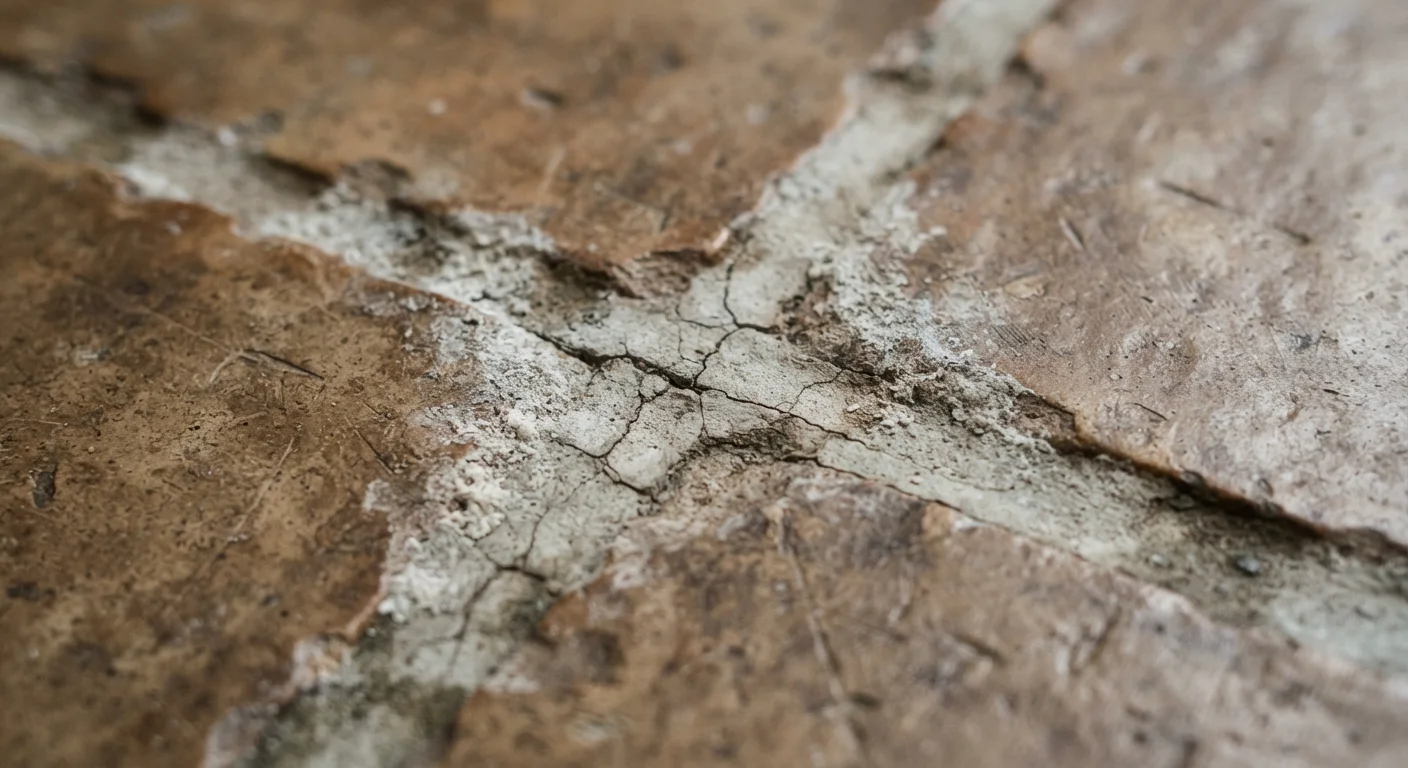
Photo credit: featuredbuzz.com
In this article
Learn to identify early warning signs in tile and grout so minor surface issues can be addressed before they become costly structural repairs.
Key Takeaways
- Efflorescence signals active moisture movement through your substrate, not just a dirty surface.
- Hollow or loose tiles mean the adhesive bond has failed and water entry is likely.
- Hairline cracks in grout alone are usually repairable; cracks running through the tile itself need more investigation.
- Most grout and sealant repairs are DIY-friendly, but subfloor damage or large cracked areas call for a professional.
- Catching tile problems early can prevent subfloor rot and mold, which cost far more to fix.
What your tile is trying to tell you
Tile is meant to last decades, and it usually does, but only when the layers beneath it stay stable and dry. The surface you see is just the top of a stack: tile, adhesive mortar, substrate (often a cement board or plywood), and the subfloor below that. Problems at any layer eventually show up at the top as cracks, staining, or loose tiles.
Reading those signals accurately is the difference between a weekend repair and a gut-and-replace project. The three most common early warnings are efflorescence, hairline cracks, and hollow or shifting tiles. Each one points to a different problem, and each one has a different urgency.
Efflorescence: the white powder that means water is moving
Efflorescence looks like a chalky white or grayish film on the tile surface or grout lines. It forms when water carries dissolved salts up through the substrate and deposits them as it evaporates. Wiping it off cleans the surface, but it will return if the moisture source continues.
In a bathroom, the likely source is grout that has lost its seal, allowing shower or bath water to seep behind the tile repeatedly. On a basement or laundry room floor, it can indicate water wicking up from below the slab.
Efflorescence returns: what that tells you
Efflorescence on its own does not mean the tile will fail immediately. It does mean water is finding a path through the assembly on a regular basis. Track whether it returns after cleaning and how quickly, because that rate tells you how active the moisture problem is. If the tile grout in the affected area also sounds hollow when tapped, the adhesive bond is likely breaking down, which is the more urgent problem to address.
Efflorescence on its own does not mean the tile will fail immediately. It does mean water is finding a path through the assembly on a regular basis. Track whether it returns after cleaning and how quickly, because that rate tells you how active the moisture problem is.
If the tile grout in the affected area also sounds hollow when tapped, the adhesive bond is likely breaking down, which is the more urgent problem to address.
Hairline cracks: grout versus tile body
Not all cracks are equal. A crack limited to the grout line between tiles is almost always a surface-level repair. Grout is rigid and inflexible, and normal house movement, slight subfloor flex, or thermal cycling can cause it to crack over time without any underlying damage to the tile or substrate.
A crack that runs through the body of the tile itself is a different situation. That usually means something beneath the tile moved enough to exceed what the tile could absorb. A single cracked tile after a heavy object was dropped is usually isolated. A pattern of cracked tiles in a line or across a section of floor suggests the subfloor is flexing, settling unevenly, or was never stiff enough for tile installation.
When you find a cracked tile, press on it gently with your foot. If it flexes or shifts, the adhesive has failed and water is likely already underneath. That tile needs to come out so you can inspect what is below before any patching makes sense.
For a broader look at which repairs are within DIY reach and which need a licensed contractor, see our guide to safe DIY repairs versus professional jobs.
Hollow tiles and loose grout: the adhesion problem
Tapping tiles with a coin or knuckle is one of the fastest diagnostic tools available. A solid tap returns a dense, flat sound. A hollow tile returns a dull, resonant thud. That hollow sound means the tile has separated from the mortar bed beneath it, creating an air gap.
Hollow tiles are not automatically an emergency, but they do let water pool underneath the tile rather than drain away. Over time, that standing water softens the substrate, degrades the remaining adhesive, and can reach the subfloor. Once a subfloor becomes water-damaged or develops mold, the repair cost increases substantially.
1 in 3
Tile failures traced to subfloor moisture
Tile installation guides from the Tile Council of North America identify moisture intrusion as one of the leading causes of tile and grout bond failure in residential settings.
2x to 5x
Cost increase when subfloor is involved
General contractor estimates consistently show that tile repairs requiring subfloor replacement cost several times more than surface-only grout or tile work.
Loose or crumbling grout is a related sign. Grout that powders when you press it or chips out in pieces has lost its integrity. It no longer blocks water, so every wet area nearby is a potential entry point. Re-grouting a small section is one of the more accessible DIY repairs, but if the grout failure covers a wide area and multiple tiles are hollow underneath, a broader assessment is worth doing before you patch the surface.
Water damage that starts under a tile floor can sometimes connect to larger moisture pathways in the home, similar to how clogged gutters create hidden damage paths. Our article on the real costs of skipping gutter cleaning covers how water finds its way into structures through overlooked entry points.
A simple inspection routine
Walking through your tiled areas once or twice a year with a focused eye takes about ten minutes and catches most problems before they escalate. Check grout lines for cracks or gaps, look at tile edges for chips or separation, tap a sample of tiles in each room to check for hollow spots, and look along the base of walls for any white residue.
In wet areas like showers, check the caulk bead where tile meets the tub or shower pan. That joint is designed to flex, and grout used there instead of caulk will crack. A missing or cracked caulk line at that junction is a direct water entry point and a common source of hidden water damage behind tile walls.
Resealing grout in wet areas, replacing cracked caulk, and filling isolated hairline grout cracks are all within the reach of most homeowners with basic tools. Subfloor damage, large areas of debonded tile, or cracks through multiple tile bodies are the point where a tile contractor or general contractor should take a look before you commit to any surface repair.
Frequently Asked Questions

Author
Affordable Home & Garden Editorial Team
Affordable Home & Garden Editorial Team is the collective byline for our editorial team and contributor network. Articles published under this byline or an editorial pen name are researched, written, and reviewed according to our editorial standards for clarity, consistency, and independence before publication.
View all articles →