
The Envelope Budget System: A Cash-Based Approach to Family Spending
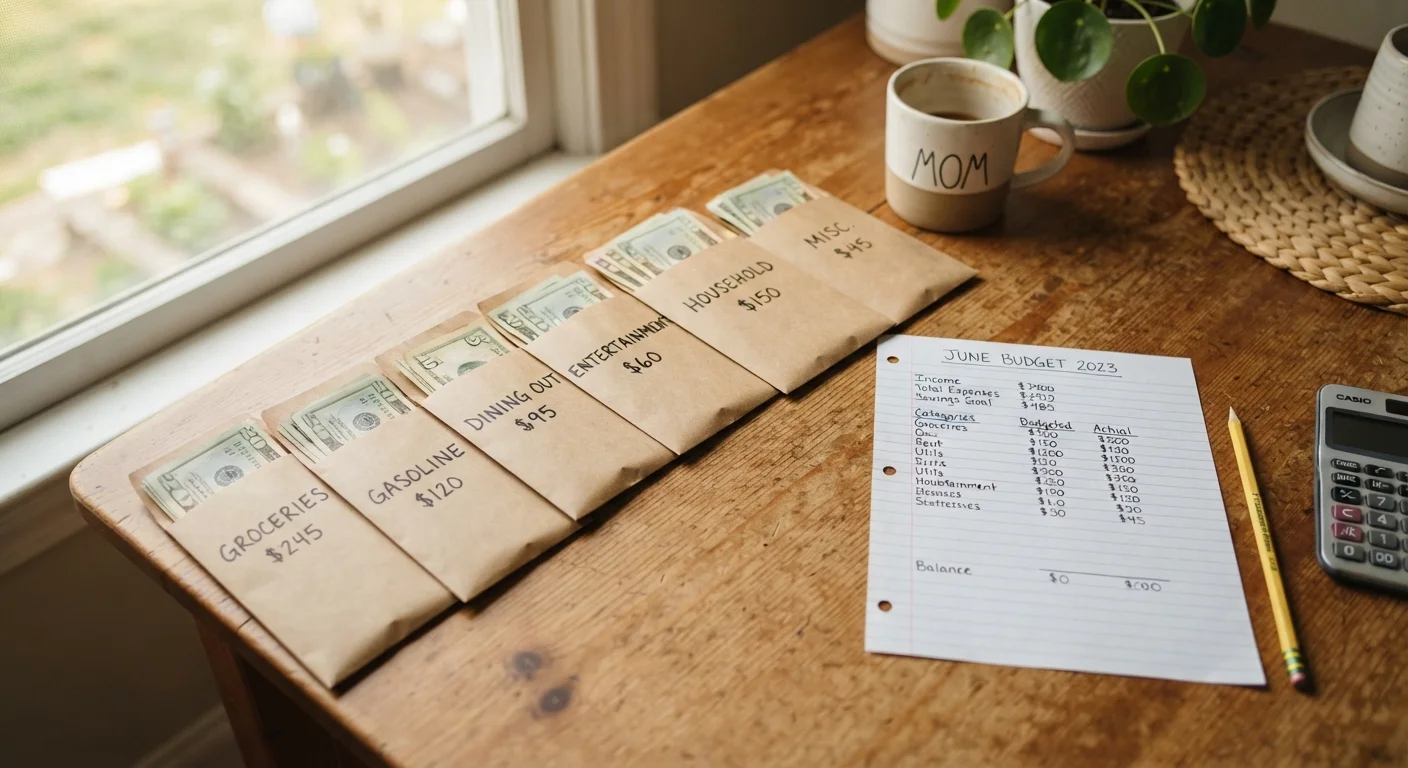
Photo credit: featuredbuzz.com
In this article
Learn how the envelope budgeting method works, why families swear by it, and how to set it up for your household's real spending categories.
Key Takeaways
- Each envelope holds only the cash you have budgeted for that category, making overspending physically impossible.
- The system works best for variable spending categories like groceries, gas, and entertainment.
- Fixed bills paid by check or auto-pay do not need envelopes; focus cash envelopes on discretionary spending.
- Moving money between envelopes is allowed, but it requires a conscious decision rather than a swipe.
- Families who struggle with card overspending often find the tactile nature of cash changes their behavior.
How the system actually works
At the start of each budget period, typically a month, you withdraw enough cash to cover your planned variable spending. You then sort that cash into labeled envelopes. When you go grocery shopping, you bring the grocery envelope. At the register, you pay from it. When the cash is gone, grocery spending stops.
That constraint is not a punishment. It is the mechanism. A debit card lets you overspend a category without any friction. An empty envelope creates a hard stop that no amount of rationalizing can get around.
Fixed expenses, like a mortgage payment, utilities set to auto-pay, or a car loan, do not need envelopes. Those amounts do not change month to month, so there is no discretionary decision to manage. Reserve your envelopes for the categories where your spending tends to drift.
Start with your three worst categories
Rather than creating envelopes for every possible expense, identify the two or three categories where your spending most often exceeds your intention. Mastering those first builds confidence and produces the clearest results in the first month. You can expand the system once the habit is comfortable.
Choosing your spending categories
Most families do well starting with five to seven categories. Common ones include groceries, gas, dining out, household supplies, clothing, personal care, and a miscellaneous category for small purchases that do not fit elsewhere.
The categories that cause the most budget trouble in a given household are the ones worth isolating first. If your grocery spending routinely runs over what you plan, that envelope will give you useful data fast. If dining out is where money disappears, a dining envelope with a firm cash limit changes the decision-making at the restaurant door.
After the first month, you will likely find some envelopes consistently run short and others still have cash left over. That is normal, and it is feedback. Adjust allocations, not just for comfort, but based on what your household actually spends. Small spending habits that quietly drain a budget can help identify where money tends to disappear before you even notice.
Setting realistic cash amounts
The envelope system fails most often when families set unrealistically low amounts and then abandon the whole method after the first hard week. Before you set any envelope amount, look at two to three months of real spending in each category. Bank or card statements work fine for this. Average the numbers, then decide whether to match that average or try to reduce it slightly.
A 10 to 15 percent reduction from your current average is a reasonable starting point for categories you want to trim. A bigger cut than that often leads to frustration and gives up. The goal in the first month is to get comfortable with the mechanics, not to hit an aggressive savings number immediately.
For families planning a vacation or a large purchase, adding a dedicated savings envelope to the monthly routine can help. Building a realistic family vacation budget walks through how to break a travel goal into monthly savings targets.
A family of four notices their grocery spending varies wildly month to month, sometimes running $200 over their mental estimate.
A couple finds they are consistently short on cash by the third week of the month but cannot identify where the money goes.
A single parent wants to save for a summer road trip without opening a separate savings account.
A family tries a monthly budget spreadsheet but keeps overspending because swiping a card feels abstract.
Making the system stick
The biggest practical challenge is that many purchases today happen online or through automatic charges. Those transactions do not work with physical cash. Some families handle this by keeping a separate small checking account for online purchases and mentally tracking it as a single envelope category. Others use a digital envelope app to manage those categories while keeping physical cash for in-store spending.
Subscription charges are worth a separate look. If your household carries several recurring monthly services, those function like fixed expenses but can creep upward over time. How subscription creep quietly inflates monthly costs covers how to audit them and bring them under control.
Families that review their envelopes together, even briefly at the end of each week, tend to stay on track longer than those who only look at balances when a problem surfaces. A ten-minute check-in, where each person sees how much is left in the categories they spend from, keeps the system from becoming invisible. For a broader yearly view, an annual household expense review can show patterns the monthly envelopes do not capture.
Frequently Asked Questions

Author
Frugal Family Living Editorial Team
Frugal Family Living Editorial Team is the collective byline for our editorial team and contributor network. Articles published under this byline or an editorial pen name are researched, written, and reviewed according to our editorial standards for clarity, consistency, and independence before publication.
View all articles →