
Meal Planning vs. Spontaneous Grocery Shopping: What Actually Saves More Money
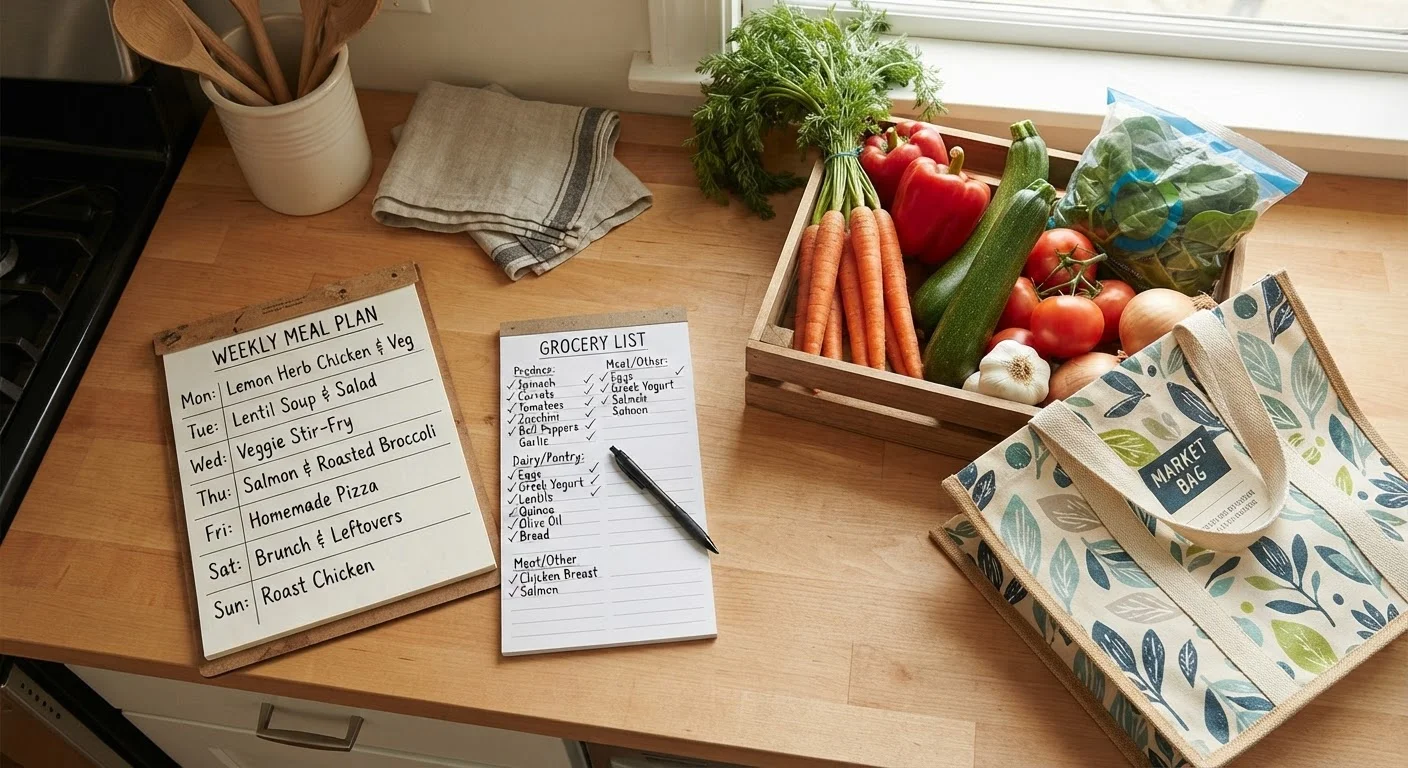
Photo credit: featuredbuzz.com
In this article
A side-by-side look at planned versus unplanned grocery habits, including the hidden costs most families never factor in.
Key Takeaways
- Meal planning typically reduces weekly grocery spending by cutting impulse purchases and food waste.
- Spontaneous shopping carries hidden costs including duplicate purchases, extra store trips, and spoiled food.
- Neither approach guarantees savings on its own; execution and consistency matter more than the method.
- Combining light planning with some flexibility often works better than a rigid all-or-nothing system.
- Food waste is one of the largest untracked grocery expenses most American families overlook.
Where the money actually goes
Most families think of grocery spending as one number: the total on the receipt. The real picture includes what gets thrown away, how many extra trips happen mid-week, and how often a bare fridge leads to takeout. Those secondary costs rarely appear in any mental budget, but they add up fast.
The U.S. Department of Agriculture has estimated that American households discard roughly 30 to 40 percent of their food supply. For a family spending $200 a week on groceries, that fraction represents a significant dollar loss before anyone even sits down to eat. Spontaneous shopping is a direct driver of that waste because purchases are often mood-driven rather than need-driven.
Meal planning attacks the problem at the source. When you write out four or five dinners before going to the store, you buy a bunch of celery because you need it for a specific dish, not because it looked good in the produce aisle. That specificity is where the savings live. For more on controlling what leaves your cart, see practical strategies for trimming the grocery bill without changing what your family eats.
| Criterion | Meal planning | Spontaneous shopping |
|---|---|---|
| Typical food waste | Lower (purchases tied to specific meals) | Higher (impulse buys often go unused) |
| Upfront time required | 20 to 30 minutes per week | Minimal planning time |
| Extra store trips per week | Usually one trip | Often two or more |
| Impulse spending risk | Lower (list guides purchases) | Higher (no list to anchor decisions) |
| Flexibility for schedule changes | Requires adjustment when plans shift | Adapts easily to schedule changes |
| Risk of pantry duplication | Lower (pantry checked before shopping) | Higher (easy to forget what is on hand) |
The hidden costs of shopping without a plan
Spontaneous shopping has a reputation for flexibility, but it carries costs that most households never track. The first is the return trip. When dinner requires an ingredient that is not in the pantry, someone makes another store run, and that trip rarely ends with only one item.
The second cost is duplication. Without a list anchored to what is already at home, families regularly buy a second jar of pasta sauce or a third bottle of soy sauce because they could not remember what was in the cabinet. These are small amounts individually, but routine spending patterns like this quietly drain a family budget over months and years.
The third cost is spoilage. Buying produce, dairy, or meat without a concrete plan for when to use it means those items sit until they are no longer usable. A pound of ground beef that gets forgotten costs the full purchase price, plus the replacement purchase when you finally need it.
What meal planning actually requires
A common reason families abandon meal planning is that they try to plan every meal, every day, for an entire week in one sitting. That level of detail is hard to sustain and rarely necessary.
A more practical version involves choosing four or five dinners, writing a grocery list from those meals plus known household staples, and checking what is already in the fridge before going to the store. That process takes about 20 minutes and covers the decisions that drive most of the spending.
The time investment is real, but so is the payoff. Families who plan even loosely report fewer last-minute restaurant meals and less food thrown away at the end of the week. If vacation food planning interests you, the same logic applies: packing your own meals on family trips uses identical principles to cut costs on the road.
30-40%
U.S. household food supply discarded
According to the U.S. Department of Agriculture, American households waste between 30 and 40 percent of their food supply.
$1,500+
Estimated annual food waste cost per family
The Natural Resources Defense Council has estimated that the average American family of four discards the equivalent of roughly $1,500 in food each year.
2-3x
More likely to impulse-buy without a list
Consumer behavior research has consistently found that shoppers without a list are significantly more likely to add unplanned items to their cart.
When spontaneous shopping is the smarter call
Meal planning is not the right fit for every household. Families with genuinely unpredictable schedules, rotating shift workers, or members with frequently changing dietary needs may find that rigid plans produce waste of their own: planned meals that never get cooked because life intervened, leaving perishables unused.
In those cases, a hybrid approach often performs better than either extreme. Shopping without a full meal plan but with a firm per-trip budget and a short list of versatile staples (proteins, grains, canned goods) can keep spending in check without requiring a structured weekly calendar. The discipline shifts from planning meals to controlling the cart in the moment.
Generic and store-brand products are one useful tool in either scenario. evaluating which store brands are worth buying can reduce the cost per item whether you planned the purchase or not.

Author
Frugal Family Living Editorial Team
Frugal Family Living Editorial Team is the collective byline for our editorial team and contributor network. Articles published under this byline or an editorial pen name are researched, written, and reviewed according to our editorial standards for clarity, consistency, and independence before publication.
View all articles →